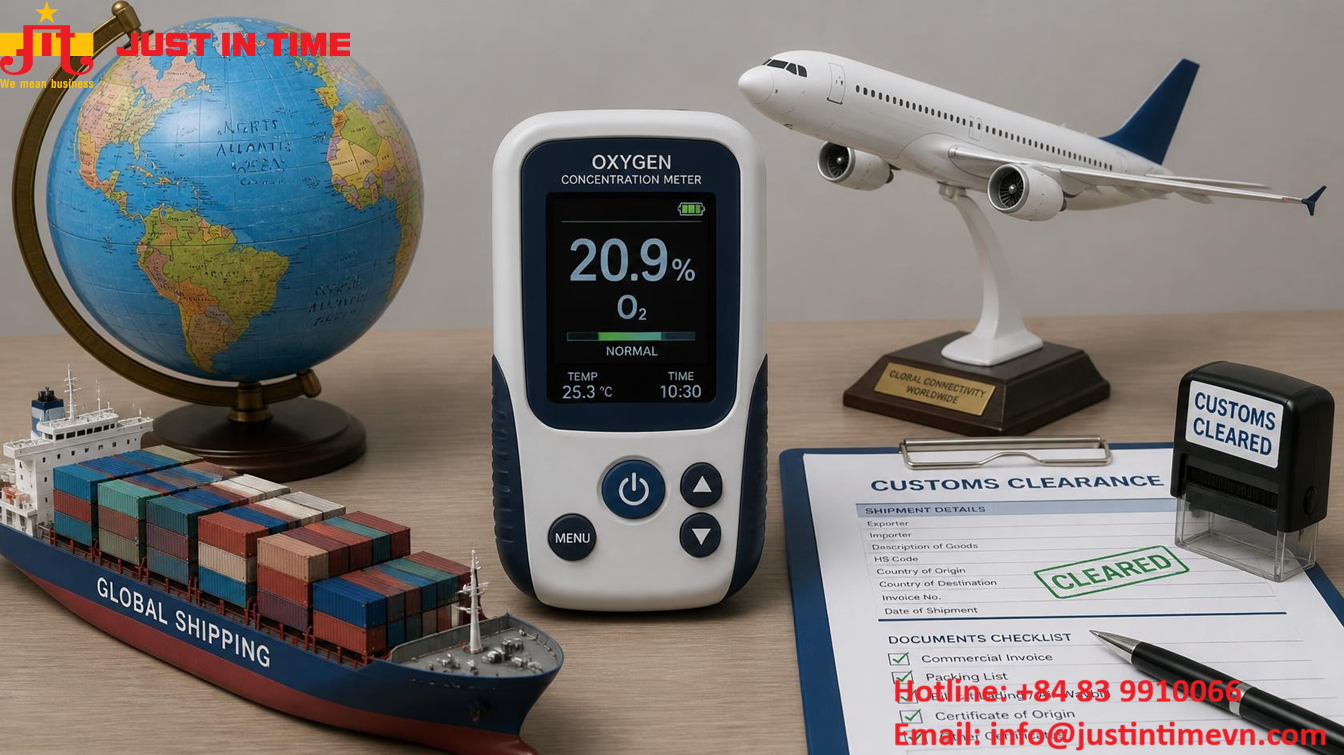
1. Product Overview and Import Policy
Common types of pulse oximeters include:
-
Fingertip pulse oximeters
-
Handheld pulse oximeters
-
Desktop SpO2 monitors
-
Pediatric pulse oximeters
-
Adult pulse oximeters
-
Bluetooth-enabled pulse oximeters
-
Pulse oximeters with internal memory
-
Pulse oximeters with alarm functions
-
Hospital-use pulse oximeters
-
SpO2 modules integrated into patient monitors
Pulse oximeters are designed to measure peripheral blood oxygen saturation and pulse rate. Depending on the specific model and intended use, the device must be classified and managed according to Vietnam’s medical device regulations.
Before importing, businesses should check:
-
Intended use
-
Type of pulse oximeter
-
Measurement method
-
SpO2 accuracy
-
SpO2 measurement range
-
Pulse-rate measurement range
-
Sensor type
-
Whether the device is intended for home or professional medical use
-
Medical device classification result
-
Applicable declaration or circulation registration number
-
Model
-
Manufacturer
-
Medical device owner
-
Product labeling
-
HS classification
-
Import duty and VAT
2. HS Codes for Pulse Oximeters
2.1 Reference HS Code
Pulse oximeters are devices used to measure and monitor physiological parameters and are generally considered under heading 9018, which covers instruments and appliances used in medical, surgical, dental, or veterinary sciences.
A commonly considered reference HS code is:
-
9018.19.00: Other electro-diagnostic apparatus
However, HS code 9018.19.00 should only be used as a reference and should not automatically be applied to every device that displays SpO2.
2.2 Distinguishing Pulse Oximeters from Similar Devices
Importers should distinguish a standalone pulse oximeter from:
-
Multiparameter patient monitors
-
Blood gas analyzers
-
Heart-rate monitors
-
Smartwatches with SpO2 functions
-
Wearable health-monitoring devices
-
Dedicated SpO2 monitors
-
Pulmonary function testing equipment
-
Ventilators incorporating an SpO2 module
-
SpO2 sensors imported separately
For example, a patient monitor may simultaneously measure:
-
ECG
-
SpO2
-
NIBP
-
Respiration
-
Temperature
-
EtCO2
Where SpO2 is only one of several functions of a multiparameter monitor, the HS code should be determined according to the principal function and overall configuration of the complete device.
2.3 How to Determine the Correct HS Code
The correct HS code should be determined based on:
-
Product construction
-
Principal function
-
Measurement principle
-
Sensor type
-
Optical technology
-
SpO2 measurement range
-
Pulse-rate measurement range
-
Measurement accuracy
-
Waveform display capability
-
Alarm functions
-
Data storage capability
-
Bluetooth or Wi-Fi connectivity
-
Continuous-monitoring capability
-
Intended users
-
Medical intended use
-
Product catalog
-
Datasheet
-
Instructions for use
-
Medical device documentation
For multifunctional equipment, the principal function that gives the product its essential character should be identified before HS classification.
3. Import Duties and VAT
The taxes that may apply when importing pulse oximeters include:
-
Import duty
-
Value-added tax
The applicable rates depend on:
-
HS code accepted by customs
-
Country of origin
-
Tariff schedule effective on the customs declaration date
-
Certificate or proof of origin
-
Eligibility for special preferential tariff treatment
-
Tax policy applicable to medical devices at the time of importation
Where the goods originate from a country or territory that has a free trade agreement with Vietnam, a special preferential import duty rate may apply if the relevant rules of origin are satisfied and valid proof of origin is available.
Common certificates or proofs of origin may include:
-
C/O Form E
-
C/O Form D
-
C/O Form AK
-
C/O Form AJ
-
C/O Form VJ
-
C/O Form VK
-
CPTPP C/O
-
EVFTA proof of origin
-
RCEP C/O
VAT should be determined according to the HS code, medical device documentation, and tax regulations effective when the customs declaration is registered.
Reference tax calculation formulas:
Import duty = Customs value × Import duty rate
VAT = (Customs value + Import duty) × VAT rate
Importers should not automatically apply the same tax rate used for previous shipments without reviewing the current tariff schedule and tax policy.
** See more Electrocardiograph (ECG Machine) Import Procedures
4. Import Documentation
The standard customs documentation normally includes:
-
Customs declaration
-
Commercial Invoice
-
Packing List
-
Sales Contract
-
Bill of Lading or Air Waybill
-
Certificate of Origin, if available
-
Product catalog
-
Datasheet
-
Technical documents
-
Instructions for use
Because a pulse oximeter is a medical device, the importer may also need to prepare the applicable medical device regulatory documentation.
Depending on the specific case, this may include:
-
Medical device classification result
-
Applicable declaration or circulation registration number
-
Authorization letter from the medical device owner
-
Certificate of Free Sale, where applicable
-
Manufacturer’s quality management system certificate
-
Medical device technical dossier
-
Vietnamese instructions for use
-
Warranty documentation
-
Original product label
-
Proposed Vietnamese supplementary label
-
Performance and accuracy documentation
Information across the documents should be consistent regarding:
-
Product name
-
Model
-
Brand
-
Manufacturer
-
Medical device owner
-
Country of manufacture
-
Intended use
-
SpO2 measurement range
-
Pulse-rate measurement range
-
Power source or battery type
-
Included accessories
5. Pulse Oximeter Import Process
Step 1: Determine the Product Type
The importer should determine whether the product is a fingertip pulse oximeter, handheld SpO2 monitor, dedicated SpO2 monitor, or multiparameter patient monitor.
Step 2: Review Medical Device Classification
The classification should be reviewed according to the intended use, operating principle, and applicable risk-classification rules.
Certain pulse oximeter models may be classified as Class B medical devices, but the classification of one product should not automatically be applied to all models.
Step 3: Verify Circulation Documentation
The importer should check that the following information corresponds to the actual imported product:
-
Product name
-
Model
-
Product type
-
Manufacturer
-
Medical device owner
-
Intended use
Step 4: Determine the HS Code
For a standalone pulse oximeter, 9018.19.00 may be considered as a reference HS code.
The final classification should be based on:
-
Principal function
-
Measurement principle
-
Sensor type
-
Monitoring capability
-
Product configuration
-
Technical documentation
Step 5: Check Import Duties and C/O
The importer should review:
-
Import duty
-
VAT
-
Country of origin
-
Certificate of Origin
-
Eligibility for special preferential tariff treatment
Step 6: Check the Product Label
The original label should generally show:
-
Product name
-
Model
-
Serial number, where applicable
-
Manufacturer
-
Country of origin
-
Battery type or power source
-
Main technical specifications
Step 7: Submit the Customs Declaration
The customs description should clearly state the device’s function.
A reference description for a fingertip pulse oximeter may be:
“Fingertip pulse oximeter used to measure peripheral blood oxygen saturation SpO2 and pulse rate, model…, brand…, manufacturer…, battery-operated…, 100% new.”
For a handheld device:
“Handheld pulse oximeter used to measure blood oxygen saturation SpO2 and pulse rate, model…, voltage…, brand…, manufacturer…, 100% new.”
A vague description such as:
“Oxygen measuring machine”
should be avoided.
Step 8: Submit Documents and Cooperate with Customs Inspection
Customs may request additional documents such as:
-
Product catalog
-
Datasheet
-
User manual
-
Product photographs
-
Label photographs
-
Measurement-principle documentation
-
SpO2 specifications
-
Medical device documentation
-
Circulation documentation
Step 9: Pay Taxes and Complete Customs Clearance
After fulfilling tax obligations and applicable medical device requirements, the importer may complete customs clearance and collect the goods.
Step 10: Apply a Vietnamese Supplementary Label
Before the product is placed on the Vietnamese market, a Vietnamese supplementary label should be applied if the original label does not contain all mandatory information in Vietnamese.
6. Important Notes When Importing Pulse Oximeters
Importers should pay attention to the following:
-
Do not confuse a pulse oximeter with a multiparameter patient monitor
-
Do not confuse it with a blood gas analyzer
-
Do not confuse it with a smartwatch or general wearable device
-
Check SpO2 measurement accuracy
-
Check the SpO2 measurement range
-
Check the pulse-rate measurement range
-
Check measurement resolution
-
Check display type
-
Check alarm functions
-
Check internal memory
-
Check Bluetooth or Wi-Fi connectivity
-
Check automatic shut-off functions
-
Check battery type
-
Do not use regulatory documentation issued for another model
-
Review accessories imported separately
Common accessories may include:
-
SpO2 sensor
-
Sensor cable
-
Finger probe
-
Pediatric sensor
-
Neonatal sensor
-
Carrying strap
-
Battery
-
Battery charger
-
Power adapter
-
Carrying case
-
Data-management software
Accessories imported separately may have different HS codes and regulatory requirements from the complete pulse oximeter.
Battery Requirements
Fingertip pulse oximeters commonly use standard dry-cell batteries, while some handheld or professional SpO2 monitors use rechargeable lithium batteries.
Where lithium batteries are used, importers should check:
-
Battery chemistry
-
Battery voltage
-
Battery capacity
-
Whether the battery is installed in the equipment or packed separately
-
UN38.3 test report
-
MSDS
-
Packaging requirements
-
Carrier or airline requirements
Labeling Requirements
The product label should generally include:
-
Product name
-
Brand
-
Model
-
Serial number, where applicable
-
Manufacturer
-
Manufacturer’s address
-
Country of origin
-
Power source
-
Battery type
-
SpO2 measurement range
-
Pulse-rate measurement range
-
Safety warnings
-
Storage conditions
For medical devices, special attention should be paid to consistency between the product label, circulation documentation, catalog, and actual imported goods.
** See more Nasal Irrigation Machine Import Procedures
7. Pulse Oximeter Import Services
A customs and logistics service provider may support importers with:
-
Import policy review
-
Medical device classification review
-
Verification of circulation registration
-
Model and manufacturer verification
-
Reference HS code consultation
-
Import duty and VAT review
-
C/O verification
-
Review of the Commercial Invoice
-
Review of the Packing List
-
Product catalog review
-
Datasheet review
-
Product label review
-
Preparation of customs documentation
-
Customs declaration
-
Coordination of physical inspection
-
Customs clearance
-
Delivery to the importer’s warehouse
Reviewing the medical device documentation, model, and technical specifications before shipment can reduce the risk of the goods arriving in Vietnam before the regulatory documentation is ready or properly matched.
8. FAQ – Frequently Asked Questions
8.1 Is a Pulse Oximeter Considered a Medical Device?
Yes. A pulse oximeter used to measure peripheral blood oxygen saturation is regulated as a medical device.
The exact risk classification should be determined according to the intended use and applicable medical device classification rules.
8.2 What Medical Device Class Does a Pulse Oximeter Belong To?
Certain pulse oximeter models are classified as Class B medical devices.
However, importers should verify the classification of the specific model being imported rather than relying on the classification of another product.
8.3 What Is the HS Code for a Pulse Oximeter?
For a standalone pulse oximeter, the following code may be considered as a reference:
-
9018.19.00: Other electro-diagnostic apparatus
The final HS code depends on:
-
Product construction
-
Principal function
-
Measurement principle
-
Configuration
-
Monitoring capability
-
Catalog
-
Technical documents
8.4 Do Pulse Oximeters and Patient Monitors Use the Same HS Code?
Not necessarily.
A patient monitor may measure several parameters, including ECG, SpO2, blood pressure, respiration, and temperature. Its HS classification should therefore be determined based on the function and overall configuration of the complete equipment.
8.5 Is a Product Catalog Required?
Yes. A product catalog is important for confirming:
-
Intended function
-
Measurement technology
-
SpO2 range
-
Pulse-rate range
-
Sensor type
-
Equipment configuration
-
HS classification
8.6 Can SpO2 Sensors Be Imported Separately?
Yes. However, sensors, cables, and probes imported separately should be reviewed for their own HS classification and medical device requirements.
They should not automatically use the HS code of the complete pulse oximeter.
8.7 What Documents May Be Required for a Pulse Oximeter with a Lithium Battery?
Depending on the mode of transportation, the carrier may request:
-
UN38.3 test report
-
MSDS
-
Battery specifications
-
Packaging information
9. Conclusion
A pulse oximeter is a medical device used to measure peripheral blood oxygen saturation and usually pulse rate. Before importing, businesses should review the medical device classification, circulation documentation, product model, manufacturer, HS classification, C/O, product labeling, and applicable tax policy.
For a standalone pulse oximeter, HS code 9018.19.00 may be used as a reference starting point. However, the final classification must be determined based on the product’s construction, principal function, measurement principle, sensor type, monitoring capability, product catalog, and technical documentation.
A complete pre-shipment review can help reduce the risk of incorrect HS classification, mismatched medical device documentation, customs delays, and additional storage charges.
If you have difficulties when clearing customs, you can choose Just In Time as a companion.
Just In Time's staff is always enthusiastic to support you to handle your work quickly and professionally.
JUST IN TIME JOINT STOCK COMPANY
Address: No. 5, Dong Da, Tan Son Hoa Ward, Ho Chi Minh City.
Hotline: +84 83 9910066
Email: info@justintimevn.com
Facebook: https://www.facebook.com/justintimevn
** See more Infrared Therapy Lamp Import Procedures