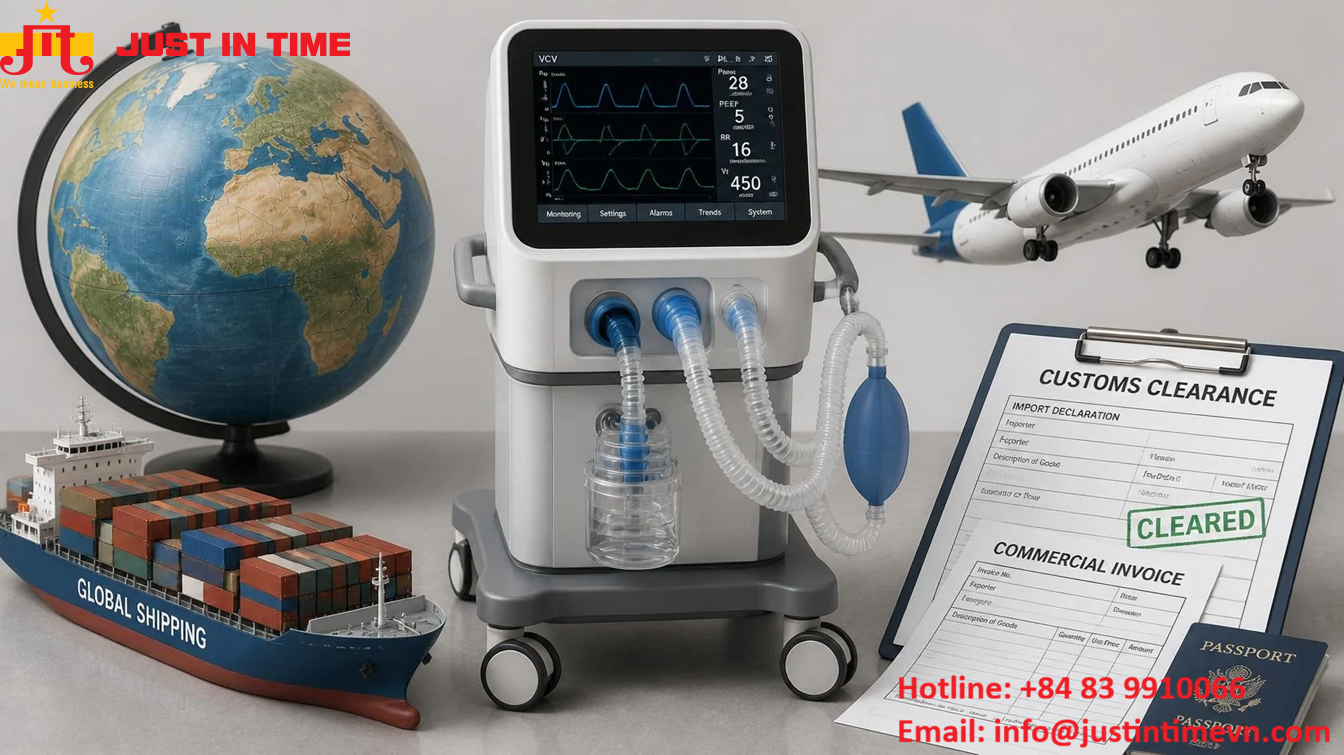
1. Product Overview and Import Policy
A ventilator generates and controls airflow delivered to the respiratory tract to help patients maintain adequate breathing and gas exchange. Depending on its design and intended use, the device may partially support or completely replace the patient’s natural respiratory function.
Common types of ventilators include:
-
Invasive ventilators
-
Non-invasive ventilators
-
Intensive care ventilators
-
Emergency ventilators
-
Transport ventilators
-
Neonatal ventilators
-
Home-care ventilators
-
CPAP machines
-
BiPAP machines
-
Ventilators with integrated patient-monitoring functions
Ventilators intended for diagnosis, treatment, or respiratory support fall within the scope of medical device regulations.
Importers should review the following matters before arranging shipment:
-
Intended use of the device
-
Whether the ventilator is invasive or non-invasive
-
Medical device classification result
-
Applicable declaration or circulation registration number
-
Product name and model stated in the regulatory documents
-
Manufacturer and medical device owner
-
Entity holding the circulation registration
-
Warranty requirements
-
Vietnamese labeling and instructions for use
-
HS classification and tax obligations
The importer should not confirm the order or ship the equipment to Vietnam until the circulation documents have been verified against the exact model, manufacturer, and intended use.
2. HS Codes for Ventilators
2.1 Reference HS Code
Ventilators are generally considered under heading 9019, which covers artificial respiration apparatus and other therapeutic respiration equipment.
A reference HS code is:
-
9019.20.00: Ozone therapy, oxygen therapy, aerosol therapy, artificial respiration, or other therapeutic respiration apparatus
HS code 9019.20.00 is provided for reference only. Importers should not automatically apply this code to every device with a respiratory support function.
Products requiring separate consideration may include:
-
Anesthesia machines with integrated ventilation functions
-
CPAP or BiPAP machines
-
Cardiopulmonary resuscitation equipment
-
Portable breathing-support devices
-
Manual resuscitators or Ambu bags
-
Ventilators with integrated patient-monitoring systems
-
Central medical gas systems
-
Medical air compressors
-
Parts and accessories imported separately
-
Oxygen concentrators
-
Nebulizers
2.2 How to Determine the Correct HS Code
The correct HS code should be determined based on:
-
Device construction
-
Principal function
-
Power capacity
-
Operating principle
-
Intended use
-
Ventilation method
-
Invasive or non-invasive respiratory support
-
Intended patient group
-
Available ventilation modes
-
Airway pressure and gas flow rate
-
Integrated air compressor
-
Integrated patient-monitoring functions
-
Included accessories
-
Product catalog
-
Manufacturer’s technical documents
-
Instructions for use
-
Medical device classification result
For example, an intensive care ventilator with multiple ventilation modes may be classified differently from a home-use CPAP machine or a manually operated breathing-support device.
Importers should prepare a detailed catalog showing the principal function, ventilation modes, intended patient group, operating principle, and technical specifications as a basis for customs classification.
3. Import Duties and VAT
The taxes that may apply when importing ventilators include:
-
Import duty
-
Value-added tax
The import duty rate depends on:
-
HS code accepted by customs
-
Country of origin
-
Tariff schedule effective on the customs declaration date
-
Type of certificate or proof of origin
-
Eligibility for special preferential tariff treatment
Where the goods originate from a country or territory that has a free trade agreement with Vietnam, a special preferential import duty rate may apply if the applicable rules of origin are satisfied and valid origin documentation is available.
Common certificates or proofs of origin may include:
-
C/O Form E
-
C/O Form D
-
C/O Form AK
-
C/O Form AJ
-
C/O Form VJ
-
C/O Form VK
-
CPTPP C/O
-
EVFTA proof of origin
-
RCEP C/O
VAT should be determined according to the HS code, medical device documentation, and tax regulations effective when the customs declaration is registered. Importers should not automatically apply the tax rates used for previous shipments.
Reference tax calculation formulas:
Import duty = Customs value × Import duty rate
VAT = (Customs value + Import duty) × VAT rate
** See more Oxygen Concentrators Import Procedures
4. Import Documentation
The standard customs documentation for importing ventilators normally includes:
-
Customs declaration
-
Commercial Invoice
-
Packing List
-
Sales Contract
-
Bill of Lading or Air Waybill
-
Certificate of Origin, if available
-
Product catalog
-
Technical documents
-
Instructions for use
In addition to the standard customs documents, importers may need to prepare:
-
Medical device classification result
-
Applicable declaration or circulation registration number
-
Authorization letter from the medical device owner
-
Certificate of Free Sale
-
Manufacturer’s quality management system certificate
-
Medical device technical dossier
-
Documents describing the device’s functions and operating principle
-
Vietnamese instructions for use
-
Warranty documentation
-
Original product label
-
Proposed label for circulation in Vietnam
-
Safety documents and operating warnings
-
Import license for special-purpose imports, where applicable
Information across the documents should be consistent regarding:
-
Product name
-
Model
-
Brand
-
Manufacturer
-
Medical device owner
-
Country of manufacture
-
Intended use
-
Intended patient group
-
Ventilation modes
-
Power capacity
-
Voltage
-
Included accessories
5. Ventilator Import Process
Step 1: Determine the Device Type and Intended Use
The importer should determine whether the product is an invasive ventilator, non-invasive ventilator, CPAP machine, BiPAP machine, transport ventilator, or another respiratory support device.
Step 2: Classify the Medical Device
The device should be classified based on its intended use, degree of invasiveness, duration of use, operating principle, and risk level. Ventilators may fall into relatively high-risk categories, but the final classification must be based on the specific product and applicable classification rules.
Step 3: Verify the Circulation Documentation
The importer should verify the applicable declaration or circulation registration number. The device name, model, manufacturer, medical device owner, and intended use stated in the documents must match the imported goods.
Step 4: Determine the HS Code and Taxes
The HS code should be selected based on the product catalog, technical documents, principal function, ventilation modes, and operating principle. Importers should also check import duties, VAT, and eligibility for preferential tariff treatment.
Step 5: Check the Product Label
The supplier should provide clear photographs of the original label before shipment. The label should show the device name, model, manufacturer, origin, and main technical specifications.
Step 6: Prepare the Import Documents
The importer should verify the consistency of the Commercial Invoice, Packing List, transport document, C/O, product catalog, label, and medical device documents before the goods arrive in Vietnam.
Step 7: Submit the Customs Declaration
The customs declaration is submitted through the VNACCS system. The product description should clearly state the device name, model, ventilator type, intended use, operating principle, power, voltage, manufacturer, and origin.
A reference customs description may be:
“Non-invasive medical ventilator used to provide respiratory support to patients, model…, power…, voltage…, brand…, manufacturer…, 100% new.”
For invasive ventilators, intensive care ventilators, or neonatal ventilators, the description should be adjusted according to the actual catalog and technical documentation.
Step 8: Submit Documents and Cooperate with Customs Inspection
Depending on the customs channel, the importer may submit an electronic dossier or cooperate with a physical inspection. Customs may request additional catalogs, technical documents, classification results, or medical device circulation documents.
Step 9: Pay Taxes and Complete Customs Clearance
After fulfilling tax obligations and applicable regulatory requirements, the importer may complete customs clearance and collect the equipment.
Step 10: Apply a Vietnamese Supplementary Label
Before the product is placed on the Vietnamese market, a Vietnamese supplementary label must be applied if the original label does not contain all mandatory information in Vietnamese.
6. Important Notes When Importing Ventilators
6.1 Product-Related Notes
Importers should pay attention to the following:
-
Distinguish invasive ventilators from non-invasive ventilators
-
Identify the intended patient group
-
Do not use classification documents issued for a different model
-
Verify the validity of the circulation registration
-
Confirm the correct name and address of the manufacturer
-
Confirm the correct medical device owner
-
Prepare catalogs showing all available ventilation modes
-
Declare the principal function and operating principle clearly
-
Avoid using a vague description such as “respiratory support machine”
-
Review applicable electrical safety standards
-
Check compatibility with the electrical supply used in Vietnam
-
Review warranty and maintenance arrangements
-
Check the import policy for accessories imported separately
Common accessories may include:
-
Breathing circuits
-
Ventilation masks
-
Humidifiers
-
Breathing valves
-
Flow sensors
-
Oxygen sensors
-
Air filters
-
Bacterial filters
-
Endotracheal tubes
-
Backup batteries
-
Power adapters
-
Equipment trolleys
-
Air compressors
-
Oxygen concentration monitoring components
Accessories imported separately may have different HS codes and regulatory requirements from the complete ventilator.
6.2 Labeling Requirements
The product label should include:
-
Product name
-
Manufacturer
-
Manufacturer’s address
-
Country of origin
-
Brand
-
Model
-
Serial number, if available
-
Lot number, if available
-
Power capacity
-
Voltage
-
Frequency
-
Ventilator type
-
Intended patient group
-
Airway pressure
-
Gas flow rate
-
Supported oxygen concentration
-
Main ventilation modes
-
Main technical specifications
-
Safety warnings
-
Storage conditions
The Vietnamese supplementary label should provide the name and address of the entity responsible for the product in Vietnam, intended use, instructions, warnings, and other mandatory information not already presented in Vietnamese on the original label.
6.3 Used Ventilators
For used ventilators, importers should review:
-
Year of manufacture
-
Equipment age
-
Model
-
Serial number
-
Manufacturing standards
-
Remaining quality
-
Previous operating time
-
Maintenance history
-
Calibration status
-
Condition of the alarm system
-
Condition of the backup battery
-
Accuracy of the sensors
-
Inspection certificate
-
Import conditions for used medical devices
Because ventilators directly affect patient safety and survival, used equipment should not be shipped to Vietnam until its import eligibility, remaining quality, and compliance with applicable technical requirements have been confirmed.
** See more Nebulizer Import Procedures
7. Ventilator Import Services
A customs and logistics service provider may support importers with:
-
Import policy review
-
Medical device classification consultation
-
Verification of circulation registration
-
Reference HS code consultation
-
Import duty and VAT review
-
C/O verification
-
Review of the Commercial Invoice and Packing List
-
Review of catalogs and technical documents
-
Product label review
-
Preparation of customs documentation
-
Customs declaration
-
Coordination of physical inspection
-
Customs clearance
-
Delivery of the equipment to the importer’s warehouse
Because ventilators are high-risk medical devices, the legal and technical documentation should be reviewed before the purchase order is confirmed and before the supplier ships the goods.
8. FAQ – Frequently Asked Questions About Ventilator Imports
8.1 Is an Import License Required for Ventilators?
A separate import license is not required for every commercial shipment. The importer should review the medical device classification, circulation registration, intended import purpose, and regulations applicable to the specific device.
8.2 What Medical Device Class Does a Ventilator Fall Under?
The classification depends on the degree of invasiveness, intended purpose, duration of use, patient group, and risk level. Invasive ventilators, non-invasive ventilators, and CPAP machines should not automatically be assigned the same classification.
8.3 What Is the HS Code for a Ventilator?
A reference HS code is 9019.20.00 for artificial respiration apparatus or other therapeutic respiration equipment. The final HS code depends on the device’s construction, principal function, operating principle, and technical documentation.
8.4 What Is the Import Duty on Ventilators?
The applicable import duty depends on the HS code, country of origin, and origin documentation. Importers should review the tariff schedule effective when the customs declaration is registered.
8.5 Is a Product Catalog Required?
Yes. A product catalog is important for verifying the device’s functions, ventilation modes, operating principle, HS classification, and applicable medical device regulations.
8.6 How Long Does Customs Clearance Take?
The customs clearance time depends on the customs channel, completeness of the documentation, validity of the circulation registration, and whether a physical inspection is required.
8.7 Can Used Ventilators Be Imported into Vietnam?
The importer must separately review the regulations applicable to used medical devices and used machinery. The goods should not be shipped until the equipment age, remaining quality, inspection documentation, and import eligibility have been confirmed.
9. Conclusion
Ventilator import procedures require businesses to comply with both customs regulations and medical device management requirements. Before importing, the business should verify the ventilator type, intended use, medical device classification, circulation documentation, HS code, applicable taxes, and labeling requirements.
HS code 9019.20.00 may be used as a reference for certain artificial respiration apparatus or therapeutic respiration equipment. However, the final classification must be based on the construction, principal function, operating principle, ventilation modes, intended patient group, catalog, and technical documents of each specific model.
Reviewing the documentation before shipment can help prevent incorrect HS classification, missing medical device documents, labeling discrepancies, customs delays, and additional storage charges.
If you have difficulties when clearing customs, you can choose Just In Time as a companion.
Just In Time's staff is always enthusiastic to support you to handle your work quickly and professionally.
JUST IN TIME JOINT STOCK COMPANY
Address: No. 5, Dong Da, Tan Son Hoa Ward, Ho Chi Minh City.
Hotline: +84 83 9910066
Email: info@justintimevn.com
Facebook: https://www.facebook.com/justintimevn
** See more Procedures for importing infusion pumps