Blender Import Procedures – HS Codes, Duties, and Detailed Clearance Process
Posted on: 04/12/2025
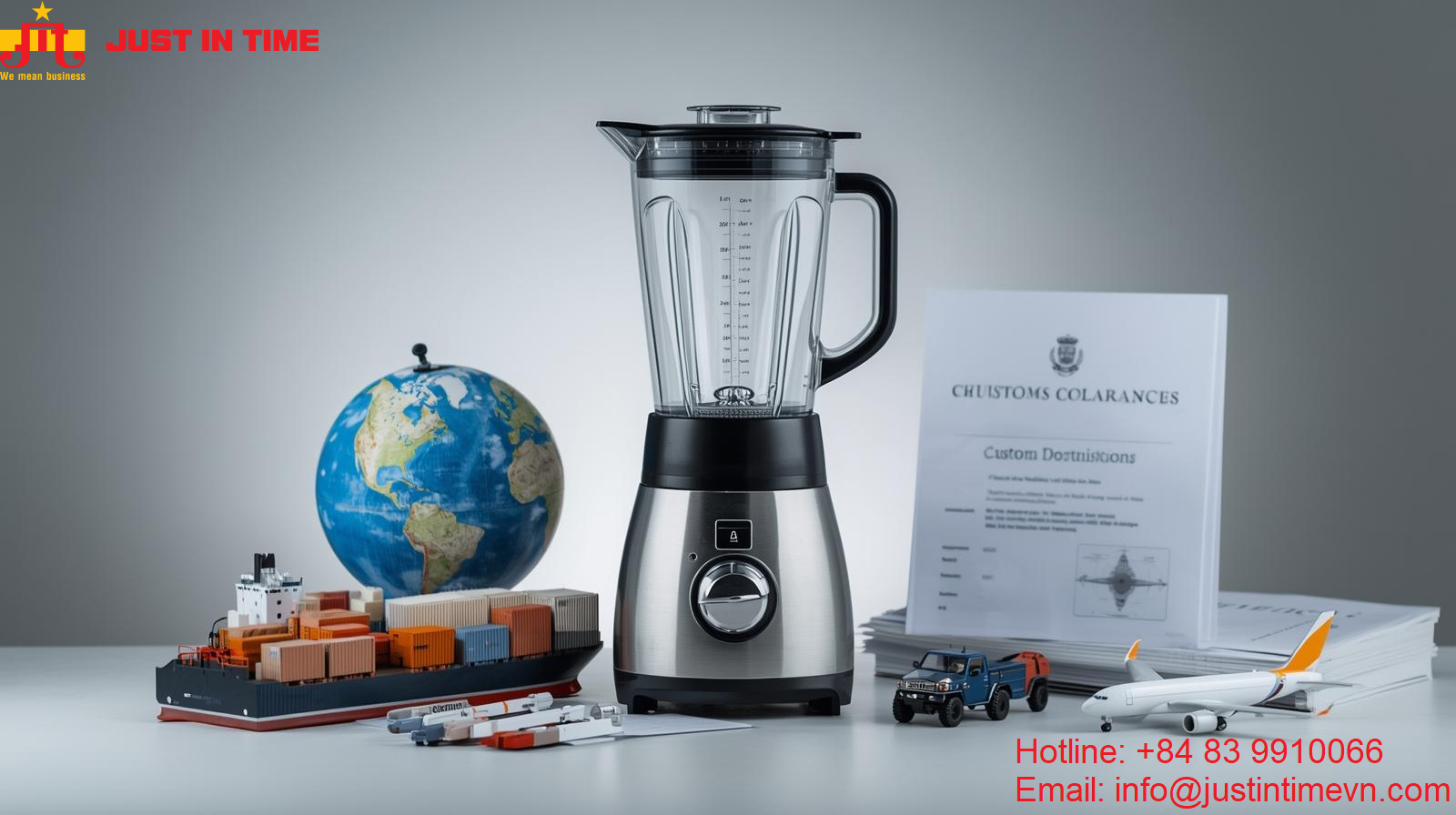
1. What Is a Blender? Is It Allowed for Import?
A blender is an electrical appliance used for blending, grinding, and mixing food. Common types include:
Blenders are allowed for import and are not restricted or prohibited. Importers only need to comply with standard customs documentation and labeling requirements.
2. HS Codes for Blenders
2.1 Common HS Codes
Blenders may fall under the following HS codes:
-
HS 8509.40.00 Food grinders and mixers used for household purposes
-
HS 8509.80.90 Other household electric appliances (multifunction or handheld blenders)
-
HS 8438.80.90 Industrial food processing blenders
2.2 How to Determine the Correct HS Code
Classification depends on:
-
Power capacity: household vs. industrial
-
Functions: single-function or multifunction
-
Jar capacity and materials
-
Technical catalog specifications
Correct classification ensures accurate tax calculation and avoids customs delays.
3. Import Duties for Blenders
Depending on HS code and origin:
Industrial blenders generally have lower duty rates compared to household appliances.
** See more Steam Iron / Electric Iron Import Procedures
4. Required Documents for Importing Blenders
Required documents include:
Blenders are not subject to mandatory quality inspection, making the import procedure straightforward.
5. Step-by-Step Import Procedures for Blenders
Step 1: Identify the correct HS code and applicable taxes
Based on product catalog, power rating, and technical specifications.
Step 2: Submit the electronic customs declaration
Declare through the VNACCS system.
Step 3: Customs inspection
Depending on customs channels, goods may undergo document or physical inspection.
Step 4: Pay import duties and VAT
Payment is made based on the customs system’s tax assessment.
Step 5: Complete customs clearance
Goods are released after taxes and documents are fully validated.
6. Important Notes When Importing Blenders
6.1 Product catalog and description
-
State power rating (W) and jar capacity
-
Type of blender: single-function, multifunction, handheld, industrial
-
Jar materials: plastic, glass, stainless steel
6.2 Documentation notes
-
Invoice must list model and specifications clearly
-
Catalog must match the actual product
-
Check C/O validity to apply preferential duties
** See more Procedures for importing cake making machines
7. Full-Service Import Support for Blenders
Services include:
Contact us for fast and efficient support.
8. FAQ – Frequently Asked Questions About Blender Import
8.1 Do blenders require an import license?
No. They are not subject to import licensing.
8.2 Are blenders subject to quality inspection?
No. Blenders are not listed under mandatory quality control categories.
8.3 What are the import duty rates for blenders?
Typically 10% – 25% depending on HS code, plus 10% VAT.
8.4 Do industrial blenders have different HS codes than household blenders?
Yes. Industrial blenders usually fall under HS group 8438.
8.5 How long does customs clearance take?
Normally 1–2 days if documents are complete.
9. Conclusion
Blender import procedures are relatively simple since no specialized quality inspection is required. With correct HS classification, complete documentation, and accurate customs declaration, businesses can achieve fast and cost-effective customs clearance.
If you have difficulties when clearing customs, you can choose Just In Time as a companion.
Just In Time's staff is always enthusiastic to support you to handle your work quickly and professionally.
JUST IN TIME JOINT STOCK COMPANY
Address: No. 5, Dong Da, Tan Son Hoa Ward, Ho Chi Minh City.
Hotline: +84 83 9910066
Email: info@justintimevn.com
Facebook: https://www.facebook.com/justintimevn
** See more Procedures for importing coffee roasting machines