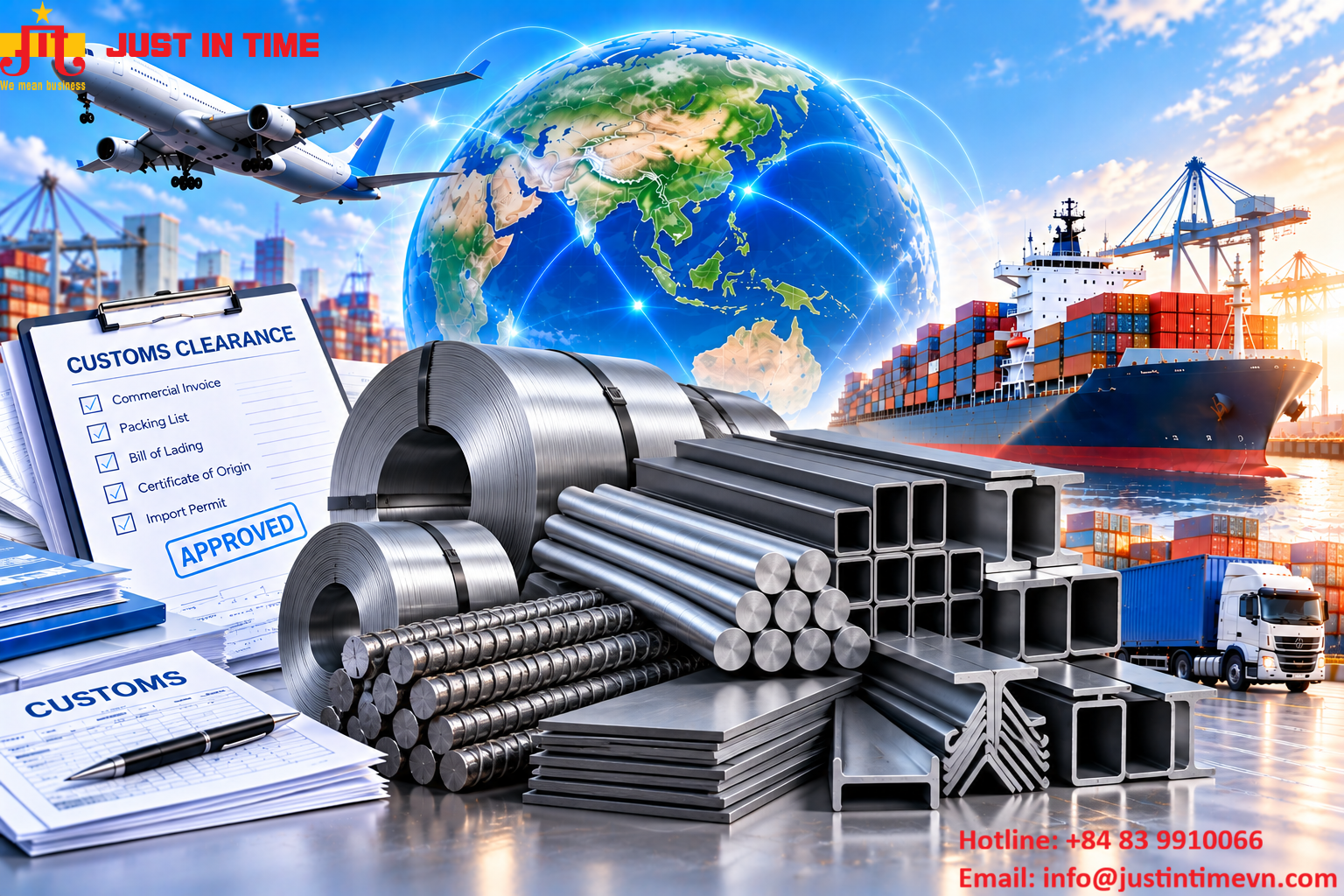
1. Steel Products and Import Policies
Steel imported into Vietnam includes various products, such as hot-rolled steel, cold-rolled steel, stainless steel, galvanized steel, steel bars, steel plates, steel pipes, and structural steel.
The applicable import policy depends on the product type, technical specifications, intended use, and country of origin.
Before importing steel, businesses should pay attention to the following requirements:
-
Import policies: Check whether the product is subject to specific import conditions or specialized management requirements.
-
Quality inspection: Certain steel products may be subject to state quality inspection or conformity assessment under applicable regulations.
-
Steel import declaration confirmation: Some products may be subject to steel import declaration confirmation procedures. Businesses should verify whether their specific products fall within the applicable scope.
-
Trade remedies: Some steel products may be subject to anti-dumping duties, safeguard measures, or other trade remedies, depending on the product and its country of origin.
-
Used steel and steel scrap: Used steel products and steel scrap may be subject to different regulations. Businesses should identify the exact product category before importing.
Businesses should check the relevant regulations before signing a purchase contract or arranging shipment to Vietnam.
2. Steel HS Codes
Identifying the correct HS code is an important step in steel import procedures. The HS code affects import duties, value-added tax (VAT), trade remedy measures, and any applicable inspection requirements.
The following HS chapters are provided for reference:
|
HS chapter |
Product category |
|
Chapter 72 |
Iron and steel |
|
Chapter 73 |
Articles of iron or steel |
The specific HS code depends on the actual characteristics of the imported goods, including:
-
Steel type and material composition.
-
Product form, such as bars, plates, coils, pipes, or profiles.
-
Dimensions, thickness, and cross-sectional shape.
-
Manufacturing process, such as hot rolling or cold rolling.
-
Surface treatment and coating.
-
Technical specifications and intended use, where relevant to classification.
Note: The HS chapters above are for reference only. The exact HS code must be determined based on the actual product specifications and Vietnam's applicable export and import nomenclature. Steel products with similar commercial names may still fall under different HS subheadings.
3. Import Duties and VAT
Taxes applicable to imported steel may include import duty, value-added tax (VAT), and additional duties under trade remedy measures, where applicable.
Import duty
The import duty rate depends on the HS code, country of origin, and applicable tariff schedule.
Depending on the shipment, businesses may qualify for preferential import duty rates under a relevant free trade agreement if the goods satisfy the applicable rules of origin and the required supporting documents are available.
A Certificate of Origin (C/O) may be required when claiming preferential tariff treatment. Businesses should check the applicable conditions before the goods are shipped.
Value-added tax (VAT)
VAT applies according to the tax regulations in force for the imported goods. Businesses should verify the rate applicable to their specific steel products at the time of customs declaration rather than assume that all steel products are subject to the same VAT rate.
Anti-dumping duties and other trade remedies
Certain steel products may be subject to anti-dumping duties, safeguard measures, or other trade remedies. The applicable scope depends on the product, country of origin, and relevant decisions issued by the competent authorities.
Businesses should check the current regulations and relevant trade remedy decisions before importing steel.
How to determine the taxes payable
To determine the taxes payable, businesses should establish:
-
The correct HS code.
-
The customs value of the goods.
-
The country of origin.
-
Eligibility for preferential import duty rates.
-
The applicable import duty and VAT rates.
-
Whether additional trade remedy duties apply.
Tax rates and trade remedy measures may change. Businesses should verify the applicable rules at the time of customs declaration.
** Xem thêm Procedures for importing steel mesh
4. Documents Required for Steel Imports
The documents required for steel imports depend on the product type and the relevant customs and specialized regulatory requirements.
The standard import dossier may include:
-
Customs declaration: The import customs declaration submitted through the customs system.
-
Commercial Invoice: The invoice issued by the seller.
-
Packing List: A packing list showing packages, quantities, and weights.
-
Sales Contract: The purchase contract, where required.
-
Bill of Lading (B/L) or Air Waybill (AWB): The transport document applicable to the shipment.
-
Certificate of Origin (C/O): Where applicable, particularly when claiming preferential import duty rates.
-
Technical documents: Product catalogues, technical specifications, datasheets, or other documents used to identify the goods.
-
Quality inspection documents: Certificates or documents required for applicable quality inspection or conformity assessment procedures.
-
Other specialized documents: Additional documents required under the regulations applicable to the specific product.
Not every shipment requires all the documents listed above. Businesses should identify the exact documentation requirements before arranging shipment.
5. Steel Import Procedures
The steel import process generally involves the following steps.
Step 1: Identify the product
Obtain information from the supplier about the steel's composition, dimensions, manufacturing process, surface treatment, and technical standards. This information forms the basis for determining the HS code and applicable import policies.
Step 2: Check the import policy
Determine whether the product is subject to special import conditions, steel import declaration confirmation procedures, quality inspection, or other specialized management requirements.
Step 3: Check quality inspection requirements
Verify whether the product is subject to state quality inspection or conformity assessment. Prepare the required technical and inspection documents where applicable.
Step 4: Determine the HS code
Classify the goods according to their actual characteristics and Vietnam's applicable export and import nomenclature. Additional technical documents may be required if the product is difficult to classify.
Step 5: Calculate taxes and check the origin
Determine the applicable import duty and VAT. Check eligibility for preferential tariffs under a relevant trade agreement and verify whether anti-dumping duties or safeguard measures apply.
Step 6: Check product labeling requirements
Ensure that the goods comply with Vietnam's applicable requirements for original and supplementary labels. The label information should be consistent with the import documentation.
Step 7: Prepare the import dossier
Prepare the commercial invoice, packing list, transport documents, sales contract where required, C/O if applicable, and any necessary technical or inspection documents.
Step 8: Submit the customs declaration
Declare the imported steel through the electronic customs system. Ensure that the product description, HS code, quantity, customs value, and country of origin are consistent with the supporting documents.
Step 9: Complete the required inspections
If the shipment is subject to customs inspection, state quality inspection, or another mandatory procedure, complete the applicable requirements in accordance with the relevant regulations.
Step 10: Pay import taxes
Pay the applicable import duties, VAT, and any additional duties required under the relevant regulations.
Step 11: Complete customs clearance
After the customs and other applicable requirements have been satisfied, the shipment can be cleared in accordance with the customs decision.
Step 12: Complete any remaining requirements
Where applicable, complete any remaining quality inspection, labeling, or other regulatory requirements before distributing or using the imported goods.
6. Important Considerations When Importing Steel
Businesses should consider the following points when importing steel into Vietnam:
-
Determine the HS code accurately: Do not classify goods based solely on their commercial names. Use the actual characteristics and technical specifications of the products.
-
Check quality inspection requirements: Different steel products may be subject to different inspection or conformity assessment requirements.
-
Review trade remedy measures: Certain products originating from specific countries or territories may be subject to additional duties.
-
Verify the C/O: Ensure that the C/O and goods satisfy the applicable rules of origin before claiming preferential tariff treatment.
-
Prepare consistent documents: Differences between the invoice, packing list, transport documents, and technical documents may result in requests for clarification from customs.
-
Comply with labeling requirements: Check the applicable requirements for original and supplementary labels.
-
Calculate the total import cost: In addition to taxes, account for freight, insurance where applicable, port charges, handling, storage, inspection, and customs brokerage fees.
-
Check current regulations: Import policies and trade remedy measures may change. Businesses should verify the applicable requirements before each shipment.
Proper preparation before shipment helps reduce the risk of customs delays and unexpected costs.
** See more Procedures for importing steel pipes
7. Steel Import Services
Businesses may use customs brokerage or import logistics services to support the steel import process.
Depending on the scope of the service, providers may assist with:
-
Reviewing technical specifications and advising on HS codes.
-
Checking import policies and quality inspection requirements.
-
Estimating import duties, VAT, and potential trade remedy duties.
-
Reviewing commercial documents and Certificates of Origin.
-
Preparing and submitting customs declarations.
-
Coordinating the required inspection procedures.
-
Arranging transportation and delivery after customs clearance.
Before using an import service, businesses should clarify the scope of work, fees, responsibilities, and any costs excluded from the quotation.
Importers remain responsible for ensuring that the information and documents supplied for customs declaration are accurate and complete.
8. Frequently Asked Questions (FAQ)
1. Do steel products require an import license in Vietnam?
The requirements depend on the specific product and the regulations in force. Businesses should check whether the goods are subject to special import conditions, declaration confirmation procedures, or other applicable requirements.
2. Are imported steel products subject to quality inspection?
Certain steel products may be subject to state quality inspection or conformity assessment. Businesses should verify the applicable requirements for their specific products before arranging shipment.
3. What is the HS code for imported steel?
Iron and steel products may fall under Chapter 72, while articles made of iron or steel may fall under Chapter 73. The exact HS code depends on the actual technical specifications and the applicable export and import nomenclature.
4. What taxes apply to imported steel?
Imported steel may be subject to import duty and VAT. Additional duties may apply if the product is covered by anti-dumping, safeguard, or other trade remedy measures. The applicable amounts depend on the HS code, customs value, country of origin, and current regulations.
5. Is a Certificate of Origin required for steel imports?
A C/O may be required to claim preferential import duty rates under a relevant trade agreement. Businesses should check the applicable rules of origin and documentation requirements before the goods are shipped.
6. Is a product catalogue required for steel imports?
A catalogue is not necessarily required for every shipment. However, catalogues, technical specifications, and related documents may be needed to determine the HS code or meet customs clarification and inspection requirements.
7. Can used steel products be imported into Vietnam?
The requirements depend on the specific goods. Finished steel products, used materials, and steel scrap may be subject to different regulations. Businesses should verify the applicable import policies before arranging shipment.
9. Conclusion
Steel import procedures in Vietnam require businesses to identify the correct HS code, determine import duties and VAT, check quality inspection requirements, review trade remedy measures, and prepare the necessary import documents.
Because requirements may vary according to technical specifications, country of origin, and applicable regulations, businesses should verify the relevant policies before shipment. Proper preparation helps reduce customs delays, control import costs, and ensure compliance with Vietnamese regulations.
If you have difficulties when clearing customs, you can choose Just In Time as a companion.
Just In Time's staff is always enthusiastic to support you to handle your work quickly and professionally.
JUST IN TIME JOINT STOCK COMPANY
Address: No. 5, Dong Da, Tan Son Hoa Ward, Ho Chi Minh City.
Hotline: +84 83 9910066
Email: info@justintimevn.com
Facebook: https://www.facebook.com/justintimevn
** See more Procedures for importing bone cement